2024
A record label for change
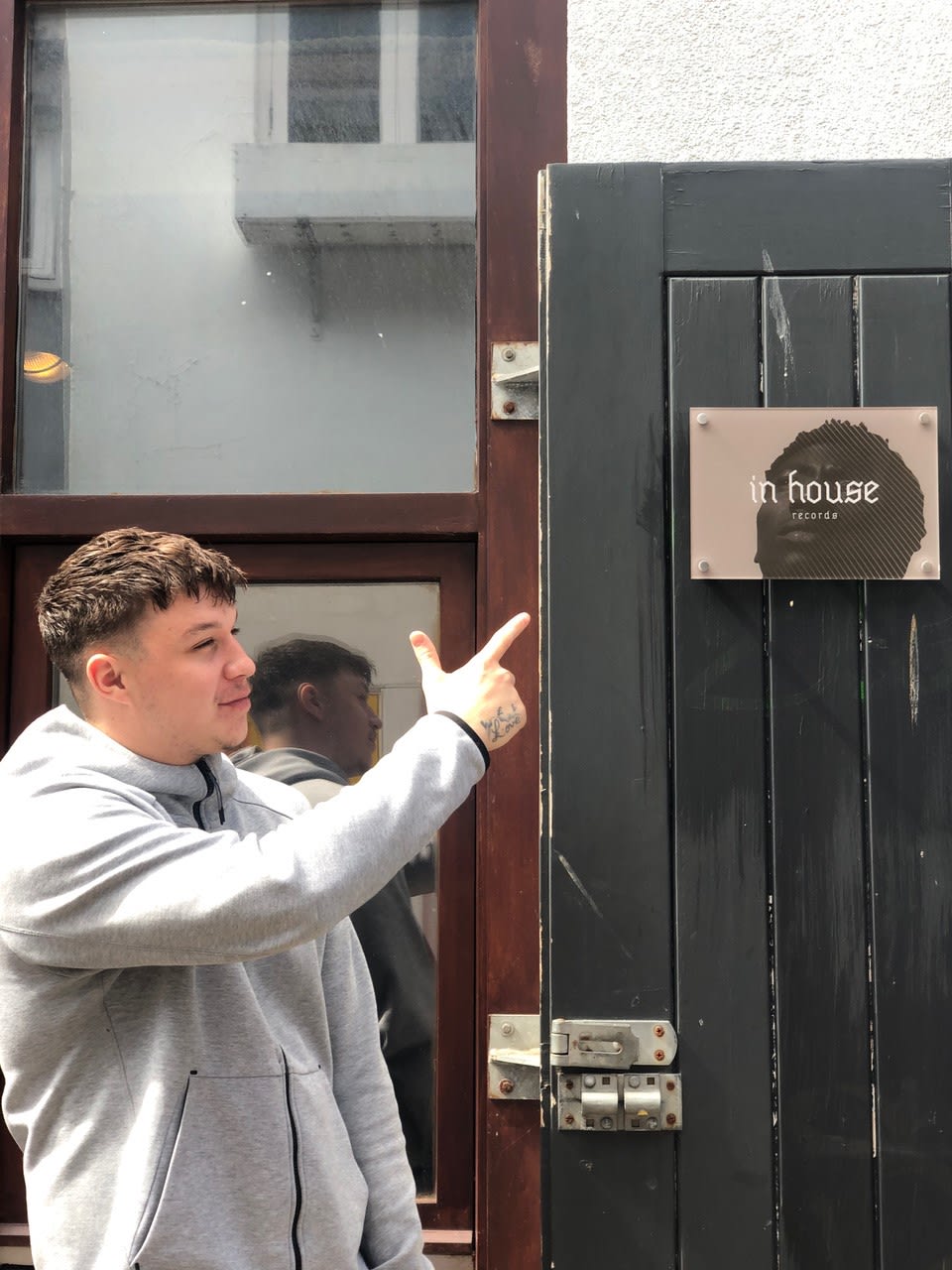
Reoffending remains a persistent challenge within the UK justice system, with nearly half of adults released from custody reoffending within a year, and rates rising significantly for those serving short sentences, all of which costs the UK government in excess of £17bn a year. At the same time, engagement with prison education remains inconsistent, often constrained by limited resources, low trust, and curricula that fail to connect with lived experience. Many individuals cycle through systems that struggle to meaningfully engage them, reinforcing patterns rather than disrupting them. It is within this gap — between potential and provision — that programmes like InHouse Records operates, creating conditions for participation, relevance, and change.
InHouse Records emerged as a response to a system already in flight — a complex, deeply human, and often overlooked system.
Working within the criminal justice system, InHouse Records operates in a space shaped by constraint, institutional rhythms, and lived experience. Rather than simplifying that complexity, our work becomes understanding it: the layered realities of incarceration, the emotional economies of participants, and the structural conditions that shape behaviour, identity, and possibility. Design situated within a living system, within the phenomena.
The starting point for InHouse Records was attention. Observing that education is built on a deficit model of what is lacking not an asset based approach of what is already known. This is a critical observation as almost 50% of the UK prison population have been let down by statutory curriculums.
InHouse sessions are designed to surface what already exists — talent, frustration, creativity, and silence. Participants bring their own narratives, often fragmented by circumstance, and through music, design, and collaborative practice, those narratives are given space to evolve. Complexity is not reduced; it is held. Contradictions are not resolved; they are explored. This approach allows for a more honest form of engagement, where outcomes are not predetermined but emerge through interaction.
Change, in the context of InHouse Records, is never delivered. It is negotiated. InHouse Records creates conditions where participants can experiment with identity, authorship, and collaboration. Through the process of making — writing lyrics, producing tracks, designing artwork — individuals begin to reposition themselves in relation to their environment.
Design becomes a vehicle for agency. When agency is fostered, people can negotiate the terms of their own support, growth and change. Short-term shifts are often immediate: increased confidence, improved communication, moments of trust. But these are not endpoints. They are signals of something deeper — a reconfiguration of how individuals see themselves and what they believe is possible.
Rather than building communities as fixed entities, InHouse Records cultivates them as evolving relationships. Participants, facilitators, and institutional partners form a dynamic network of exchange. Trust is developed over time, through consistency, presence, and shared experience.
These communities are fluid. People move through them, contribute to them, reshape them. What remains is not a static group, but a set of connections that continue to influence behaviour, aspiration, and belonging beyond the programme itself.
At its core, the work is about expanding capacity — not only skills, but ways of thinking and relating. Participants develop technical abilities in music production and design, but more importantly, they build confidence in their own voice. They learn to collaborate, to listen, to lead.
Simultaneously, institutions are invited to shift. Staff engage with new modes of practice, gaining insight into participant perspectives and alternative approaches to rehabilitation and engagement. Capacity is built and distributed.
In the short term, the impact is visible in participation and output: active engagement, completed tracks, performances, exhibitions, and moments of recognition within the institution.
In the longer term, the effects can be diffuse and also unambiguous. As verified through Nesta, InHouse has a re-offending rate of less than 1%, no less significant however are the 'diffuse' longer term impacts. Participants carry forward authorship and agency into life beyond custody. Some continue creative practices; others apply the confidence and collaborative skills in different contexts. The work contributes to reduced reoffending not through enforcement, but through transformation of identity and possibility.
For institutions, the long-term impact lies in cultural shift — towards more relational, human-centred approaches.
InHouse Records is not a finished model. It is an ongoing practice that adapts, responds, and evolves. Its value lies not only in what it produces, but in how it operates: attentive to complexity, committed to meaningful change, and grounded in the cultivation of human connection.