2025
Neighbourhood Care
Care happens in private. Behind front doors, in short visits between strangers, in moments of exhaustion, intimacy, grief, humour, confusion, routine, and dependence. It is some of the most relational work in society, yet much of the system surrounding it is designed to optimise logistics.
As adult social care systems have come under increasing pressure, care itself has gradually become fragmented — split across private providers, schedules, contracts, and targets. The relational qualities that make care meaningful often have to come second to efficiency, despite being central to wellbeing, trust and dignity.
Within this context, Camden Council, as one of the most innovative boroughs in London, recognised that technology adoption may simply work to amplify fractured processes and instead began a two-year programme with Fora to rethink the foundations of Care and Support at Home.
Working closely with residents, carers, providers, and council teams, the work explored how care might be reorganised around relationships, neighbourhoods, and the lived realities of the people delivering and receiving it.
The result was the vision for Neighbourhood Care — a long-term strategic shift toward more relational, place-based, and human-scale models of support, as well as ongoing implementation work.
Making sense of complex human and systemic realities
Adult social care is complex because people are complex. Care at home extends far beyond practical support. A single visit may involve emotional reassurance, companionship, safeguarding, grief, medication, or cognitive support alongside physical care. Yet the systems surrounding care often flatten this complexity into timed tasks, fragmented visits, and operational targets.
Against a backdrop of demographic pressure, reduced budgets, workforce instability, and social isolation, this project explored a central question: How can care systems support meaningful human relationships while still delivering efficiently?
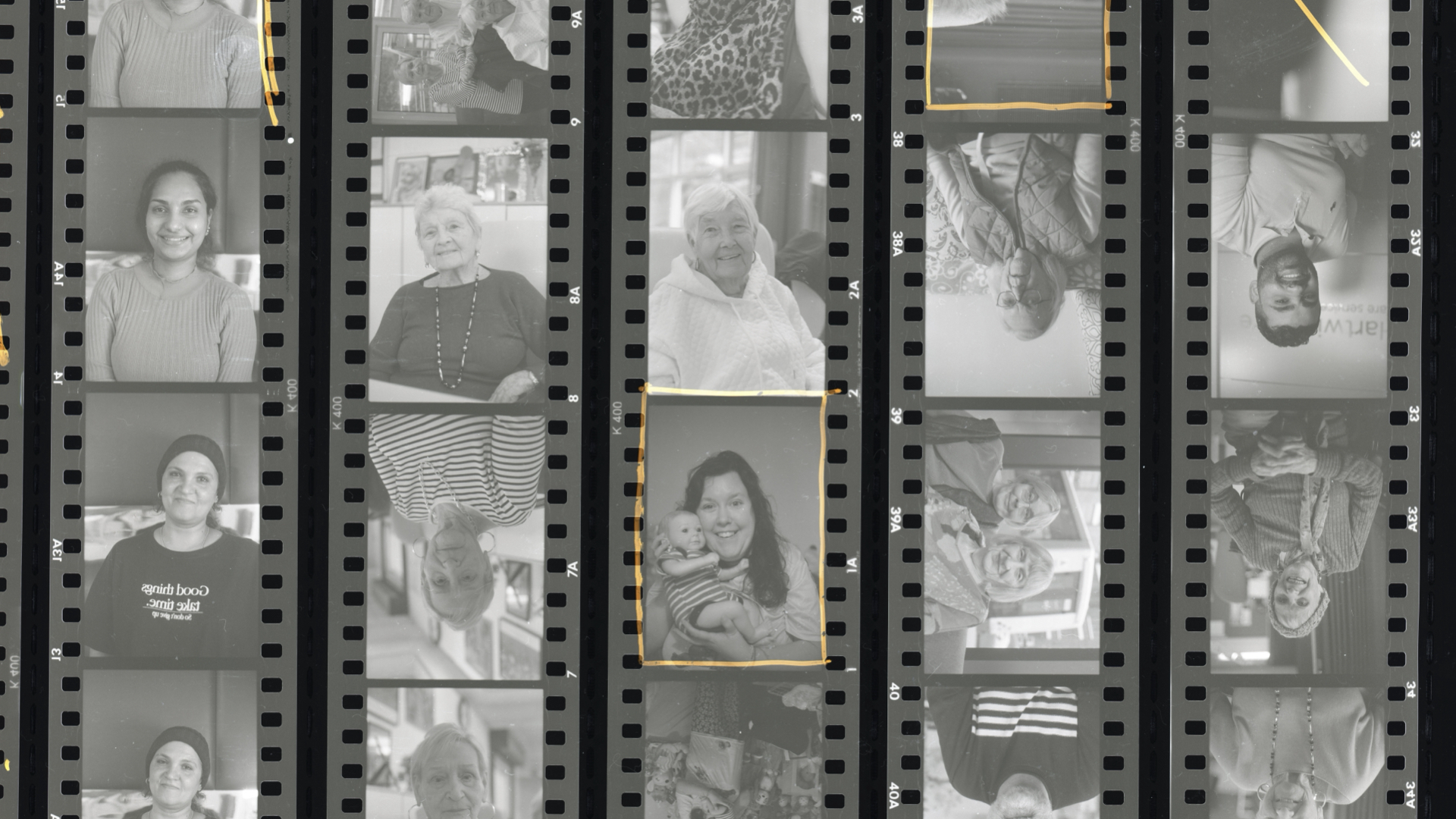
Over two years, Fora worked closely with residents, carers, providers, and council teams through forums, ethnographic research, workshops, walking groups, portrait photography, competitions, letter writing and collective reflection. These methods were used not only to understand the system, but to help those within it shape the future direction together. The approaches created unique forums (or fora) where trust and collaboration could grow over time.
A key principle of the Fora approach is that the most effective response to complex issues is not finding every problem and formulating a clever response to each. Instead, meaningful change emerges by creating the conditions for people, relationships, and systems to become more sensitive, adaptive, connected, and capable over time.
Similarly here for instance, the response to complexity is not tighter management or operational optimisation, but empowering carers and the infrastructures surrounding them to become more relational, responsive, and trusted. Well-being and efficiency can follow together.
The work recognised care as a craft — one built on tacit knowledge, emotional intelligence, and relationships — rather than simply as a transactional service.
Demonstrating that a new way is possible
The programme focused on redesigning the conditions around care to enable meaningful and trusting relationships to form.
At the centre of the Neighbourhood Care vision is a strategy for ‘Sheltered Neighbourhoods’ — hyper-localised care teams embedded within small geographic areas, enabling greater continuity and stronger relationships between carers and residents.
Alongside this, the work explored:
Alternative models for provider collaboration and commissioning
Trauma-informed approaches to care
New support structures for carers
Long-term pathways for making care a respected career
Strategic opportunities for future AI and digital systems
The programme argued that before introducing large-scale technological innovation into care, organisations first need relational infrastructures in place that are capable of understanding the realities of human need.
Through strategic planning, co-design, and systems thinking, the work demonstrated that more relational and neighbourhood-based models of care are both possible and practical.
Aligning the connections between people, neighbourhoods, and systems
Neighbourhood Care reframes care not simply as support delivered to individuals, but as a relationship between people, place, and community. The strategy reorganises care around small neighbourhood patches that could be walked across in fifteen minutes or less. This embeds carers within local life, creating greater continuity, familiarity, and trust. Over time, the focus shifts from caring only for individuals to supporting the wellbeing of the neighbourhood itself.
The vision, strategy and interventions of the project lead to more established communities where care plays out, but the work also strengthens the capabilities of the teams involved and the collaborative innovation infrastructure that allows organisations and the system as a whole to continue to learn and change.
It does this through:
Ongoing care worker forums
Carer-to-carer mentorship and training
Collaborative reflection across providers and council teams
Greater agency for carers within everyday delivery
Rather than solely delivering change as an add-on, the work cultivated the capabilities already present within the system and aligns them more effectively over time.
The work has already contributed to several tangible shifts across the care ecosystem, including:
Smaller neighbourhood care patches with greater continuity
Ongoing care worker forums and peer support
Carer-led training initiatives
Increased adoption of trauma-informed practice across providers
Early indicators suggest reduced staff turnover, improved consistency and quality within carer–resident relationships.
While many outcomes remain early signals within a longer-term transition, the work demonstrates the potential of more relational, place-based models of care and continues to build the conditions for deeper systemic change.